
Infants and Toddlers Are Safer Riding Rear-Facing
Developing Bodies of Young Children Need Extra Support
Why Rear-Facing?
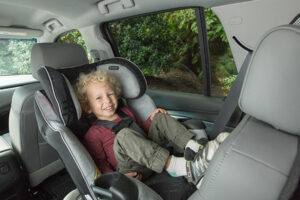 Young children should ride in rear-facing car seats from birth until they reach the weight or height limit set by the car seat manufacturer. Rear-facing car seats protect a child’s head, neck and back during a crash, minimizing the risk of serious injury.
Even in rear-end crashes, a rear-facing seat provides protection by allowing the child’s body to press into the car seat, absorbing the force and reducing stress on the neck and back.
Many caregivers are concerned about their child’s comfort or safety while riding rear-facing once the child’s legs are reaching the vehicle seat. Children are very flexible and can position their legs to provide comfort. In a crash, it is rare for leg injuries to occur to children riding rear-facing. Leg injuries heal quicker, and are less severe, than injuries to the neck and spine that can occur while riding forward-facing.
Get more information and free resources to share with parents and caregivers in your community.
When is it Safe To Forward-Face?

Rear-facing is the safest way to travel for young vehicle occupants. However, transitioning to forward-facing is appropriate when the following conditions are met:
- The child has outgrown the rear-facing mode of their current car seat by the weight or height posted on the car seat label or in the user guide, and
- The child has met the minimum age requirement for use of the car seat in forward-facing mode (if appropriate), and
- The child is within the state law requirements for forward-facing car seat use
- The child is able to sit upright for the ride
A child should remain in their forward-facing harnessed car seat until they reach the maximum height or weight limit for forward-facing harness use according to the car seat instructions provided on the labels and car seat user guide.