
Keeping Tweens and Teens Safe in Vehicles
A Lifelong Lesson in Buckling Up and Choosing Safe Behaviors
As children grow, their safety needs in vehicles evolve – but the importance of proper restraint never changes. From booster seats to seat belts to learning to drive, adults play a vital role in modeling and teaching safe behaviors that can last a lifetime.
Tweens
Why Booster Seats Matter
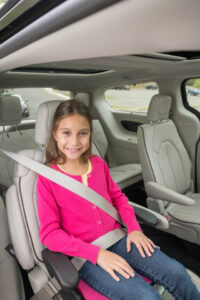 Booster seats are the most misused and misunderstood of occupant restraint devices. Often, children are transitioned to the booster seat too soon, or are transitioned into the vehicle seat belt, skipping the booster seat step, altogether. Here are few important facts to know.
- Adult seat belts do not fit children properly and often ride too high on a child’s abdomen or neck.
- Booster seats position the belt low on the hips and across the shoulder.
- Proper fit reduces the risk of abdominal and spinal injuries.
Booster Seats: A Critical Step for Growing Kids
Tweens — typically ages 9 to 12 – may look big enough for adult seat belts, but many still need booster seats to ensure the seat belt fits properly. Adult seat belts are designed for fully grown bodies, and a poor fit can lead to serious injuries in a crash.
 Sharpen Your Skills
Take the Booster Seats and Seat Belts Mini Course. This free online learning takes about 30 minutes to complete. To train your staff and track course completions, group delivery options are available upon request.
Safety Tips for Every Ride
- Buckle up every time — no exceptions.
- Ensure the seat belt is snug and properly positioned across the thighs and collar bone.
- Make booster seat use a non-negotiable rule until your child passes the Johns Hopkins fit test.
When Should a Child Transition to the Vehicle Seat Belt?
A child should travel in a booster seat until they reach the maximum height or weight allowed by the manufacturer, are developmentally able to ride correctly in the vehicle seat belt alone and pass the Johns Hopkins Seat Belt Fit Test for the vehicle in which they are riding. Because vehicle seats are different in each vehicle, it is possible that a child will require a booster seat in one vehicle and not in another.
Signs Your Child Still Needs a Booster
- the seat belt rides up on the stomach or across the neck
- knees don’t bend comfortably at the seat’s edge
- the child’s feet do not land flat on the floor of the vehicle
- the child tries to place the vehicle shoulder belt behind their back or under their arm
- They slouch or shift to get comfortable
If any of these apply, your child likely still needs a booster seat. Remember: seat belt readiness depends upon proper seat belt fit, not the child’s age.
Advocates: Help Families Make Informed Choices
Safety leaders and advocates are essential in helping caregivers make smart, informed decisions.
Ways to Support Booster Seat and Seat Belt Safety
- Share resources like these from the Centers for Disease Control and Prevention to check seat belt fit and review booster seat guidelines.
- Encourage regular fit checks as children grow.
- Promote policies and programs that support child passenger safety education. Example: American Academy of Pediatrics | Child Passenger Safety.
Teens
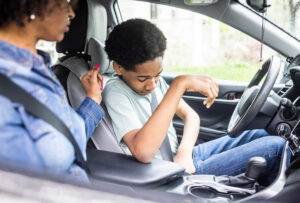 Teens: Buckled Up and Learning to Drive
Teen seat belt use remains a critical concern. In fact, National Safety Council data shows unbelted younger teens and 20- and 30-somethings to be at the most risk in fatal crash incidents. Check out the chart and infographic on this Injury Facts page. One key takeaway:
- 61% of people killed in crashes between the ages of 10-15 and 25-34 in 2023 were unrestrained at the time of crash
Work to ensure teens buckle up on every ride. This is why it matters: teens are prone to drive too fast for conditions, follow behind other vehicles too closely and often fail to yield to other drivers – all factors that contribute to crashes.
Why Buckling Up Matters
- Seat belts keep you securely in place during a crash
- Seat belts prevent ejection, which is often fatal
- Buckling up shows you care about your own safety and the safety of your friends, too
DriveitHOME: Helping Teens Drive Safely
DriveitHOME – a program of the National Safety Council – helps parents and caregivers coach their teens to ride safely and become safer drivers.
Free Resources
- Download the free DriveitHOME app to log practice hours and access weekly driving lesson ideas
- Sign the New Driver Deal to align on rules and responsibilities
- Use expert-created tools to simplify the process of teaching safe driving
Every Ride Counts
No matter the age or stage of life, buckling up correctly is the single most important way to prevent injuries and deaths. Even short trips can be dangerous. Reinforcing safe habits every time helps children understand the importance of proper restraint from childhood through adulthood.